PRETORIA – Amid rising concerns regarding migration, border enforcement, and community strife in South Africa, a group of faith-based organisations has urged the government to take significant steps to enhance law enforcement and secure the nation’s borders.
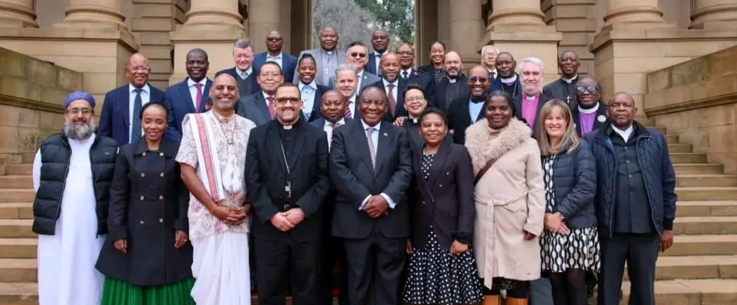
This appeal followed an urgent meeting convened by President Cyril Ramaphosa with a diverse assembly of religious leaders at the Union Buildings on Wednesday to address escalating migration issues in the country.
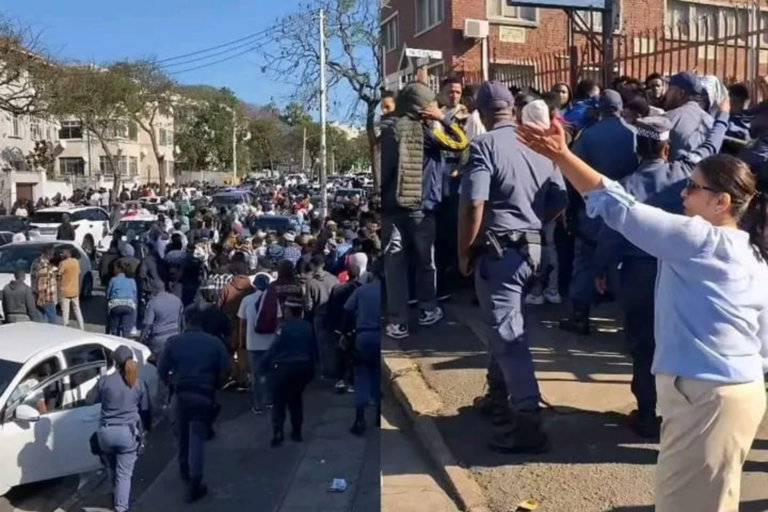
The discussions were held in the context of increasing community pressure, particularly in the Western Cape and KwaZulu-Natal, where vulnerable families and displaced populations are facing severe challenges.
Religious representatives indicated their alarm over what appears to be an unsettling trend: ordinary citizens taking on roles usually fulfilled by state authorities.
Some community members have reportedly initiated patrols, demanding identification, questioning access to public services, and trying to enforce immigration laws independently, according to the organisations.
The leaders cautioned that these actions could jeopardise the rule of law and exacerbate tensions in communities already under strain.
“We urge South Africans not to feel compelled to perform the duties of police officers, immigration officials, labour inspectors or the courts,” the organisations stated.
The coalition affirmed that the responsibility of enforcing immigration laws and maintaining public order lies with the government and duly authorised law enforcement agencies.
While expressing faith in the government’s capability to uphold the law, the organisations criticized what they perceive as inadequacies in the state’s approach to border management and law enforcement.
They contend that stronger measures are necessary to enhance border security and refine the enforcement of existing laws.
This appeal underscores one of South Africa’s most challenging policy dilemmas: finding a balance between humanitarian considerations and effective migration management.
Religious leaders expressed deep empathy for communities experiencing real hardship, as well as those vulnerable families displaced in the Western Cape and KwaZulu-Natal. However, they stressed that sustainable solutions can only be achieved through effective governance, rather than through citizen-led enforcement actions.
Their message to the government was straightforward: restore public confidence by bolstering law enforcement, securing the borders, and ensuring that government institutions carry out their constitutional duties.
As discussions about migration remain a significant topic in public discourse, the meeting brought to light the escalating concern among civil society that a lack of decisive action could intensify social tensions and further burden communities already facing economic and social difficulties.
For now, faith leaders are advocating for calm, restraint, and faith in the country’s legal systems while also calling for stronger governmental action to address the underlying issues fueling public frustration.