

Venda to Kapa
The flash floods in Nepal have resulted in a rising death toll, now confirmed at 469, significantly higher than earlier estimates. Rescue operations are ongoing, with efforts to locate numerous individuals still unaccounted for along the Nepal-China border.
Nepalese police reported the updated figures on the morning of August 28, 2026. Along with the dead, over 1,400 individuals have been reported missing in both Nepal and Tibet, which includes a significant number of foreign tourists.
This new count marks a sharp increase from the figures released just hours prior.
Authorities in South Africa have been working to locate six South African citizens who were reported missing in the impacted areas. However, as of early Friday, there have been no new verifiable updates regarding their status from either DIRCO or Nepalese officials.
Death toll rises to 469
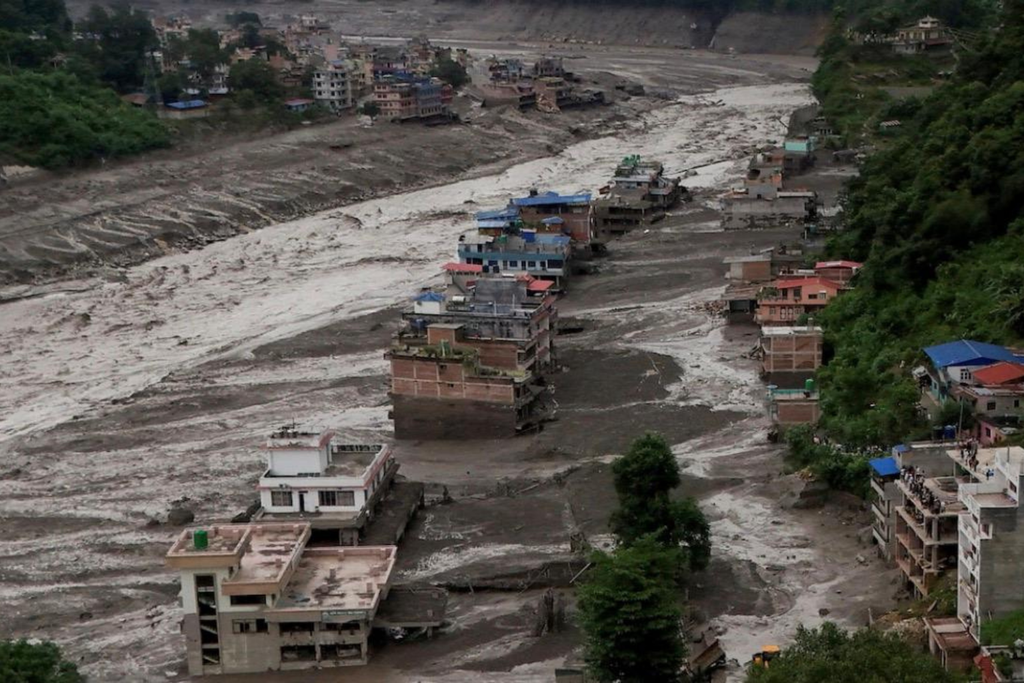
The Associated Press has confirmed that the death toll in Nepal reached 469 by Friday morning.
This represents a significant rise from previous counts.
Rescue teams continue to navigate through hazardous conditions, including mud, collapsed structures, and debris, in areas severely impacted by the flooding that followed a glacier collapse.
According to Reuters, nearly 1,000 individuals are still missing across Nepal and Tibet, including about 540 foreign nationals.
Hundreds of foreigners still unaccounted
Among those missing are many foreign trekkers and pilgrims traversing routes from Nepal to Tibet.
The calamity struck areas frequented by visitors heading to significant destinations such as Mount Kailash and Lake Manasarovar.
The destruction of roads and communication networks, coupled with isolated valleys, has made tracking the whereabouts of tourists increasingly challenging.
As a result, the lists of missing persons are subject to change as rescue teams reach remote locations.
South African nationals remain untraceable
The status of the six South Africans remains uncertain.
Initial reports from Nepalese officials indicated that these nationals were untraceable following the disaster.
As of Friday morning, no reliable updates had been provided to confirm their situation.
It is essential to note that the increase in the death toll should not be interpreted as the loss of any of the South Africans until there is official confirmation.
Search efforts intensify with technology
Rescue operations are now employing helicopters, heavy machinery, and sniffer dogs to search for survivors and recover deceased individuals.
Aircraft are also delivering essential supplies to communities that have become completely isolated.
Some survivors have been airlifted to Kathmandu for medical attention.
The focus of the rescue operations is gradually shifting from immediate evacuations to thorough searches of large debris fields.
Witness accounts of devastation
Survivors have recounted tales of entire families disappearing.
One survivor, Dibga Tamang, airlifted from Rasuwa, reported losing everyone who had been waiting for him at home.
The accounts highlight the severity of the destruction in multiple communities.
In certain areas, buildings were buried in mud up to the roof.
Ongoing flood risk
Authorities are also focused on preventing another flood event.
A lake formed by debris has emerged upstream due to the glacier collapse.
China has dispatched engineers to evaluate a separate barrier lake near the border that may accumulate up to three million cubic metres of water in the coming days.
Should either of these natural barriers fail, further flooding could occur in areas where rescue operations are continuing.
Engineering assessments underway
An engineering team from China has been deployed to conduct aerial examinations and create 3D models of the barrier lake.
According to Reuters, this lake measures roughly 150 metres in length and up to 50 metres in depth, storing an estimated 1.5 to 2 million cubic metres of water.
Heavy rainfall could cause this volume to escalate quickly.
Engineers are exploring options for creating a drainage channel to mitigate the risks of a sudden breach.
Flood triggered by glacier collapse
Experts indicate that a significant collapse involving glacier ice and rock in the Himalayas led to the initial flooding.
The debris raced through the Lhende Khola river system into populated valleys, obliterating roads, villages, and critical infrastructure.
Estimates suggest that some parts of the debris flow moved at approximately 50 metres per second, or roughly 180 kilometres per hour, leaving little time for escape.
Critical infrastructure severely damaged
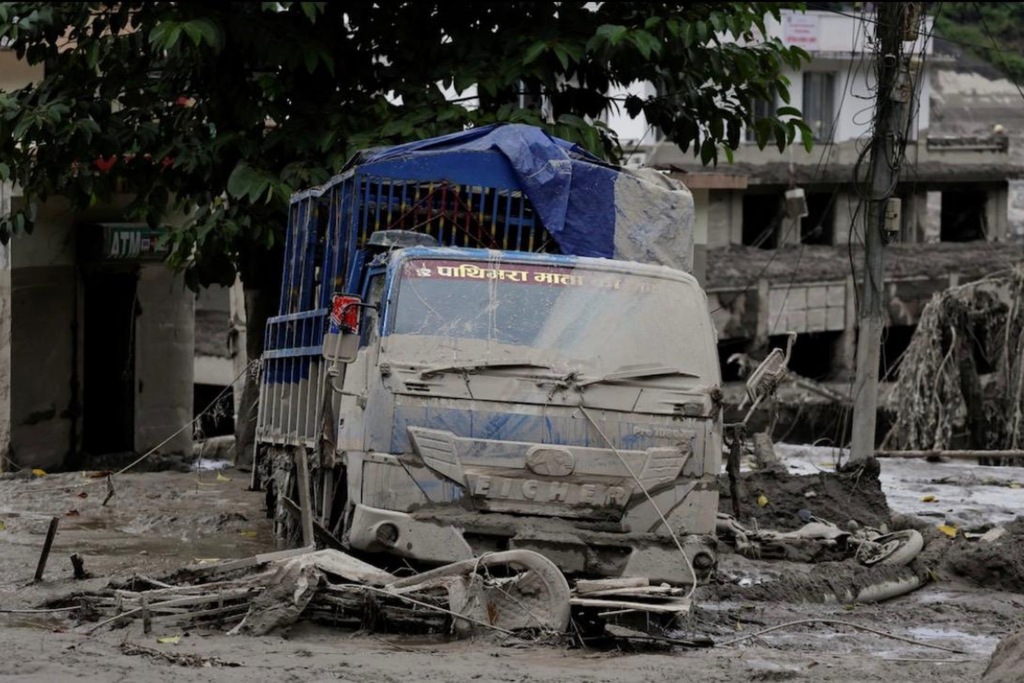
The flooding has devastated the infrastructure linking Kathmandu with Lhasa.
The Gyirong border crossing has suffered extensive damage, with customs and transport facilities destroyed.
This route is vital for both tourism and trade between the two countries.
Its destruction could have prolonged economic repercussions, even after rescue operations conclude.
More than 100 bodies recovered downstream
Bodies have been discovered far from the original site of the collapse, carried downstream by the floods.
Emergency responders have alerted that additional victims may still lie beneath mud and debris.
As a result, the total death count may continue to rise significantly.
US offers assistance
US President Donald Trump characterized the situation as devastating and announced that the United States has extended an offer of assistance to Nepal.
He stated that the U.S. stands ready to provide any support necessary.
Other nations, including India, Australia, and South Korea, have also offered or sent aid.
Climate change and increased risks
Scientists warn that although the immediate cause was a physical collapse, climate change exacerbates risks in high-altitude regions.
Warming temperatures weaken rock formations and disrupt freeze-thaw cycles, increasing the likelihood of major landslides.
Nepal has experienced a significant loss of its glacier ice in recent decades.
The significance of the updated information
Recent developments in this story have significantly altered its trajectory.
The previously confirmed death toll was in the 300s, now reported at 469.
Hundreds are still reported missing, with numerous foreign nationals unaccounted for, and the threat of a second catastrophic flood remains a concern.
This context distinguishes the article as a developing story rather than a routine update.
Looking ahead
The primary question for South African authorities remains whether the six citizens reported missing have been located.
Updates concerning their status may come later on Friday from DIRCO or Nepalese tourism officials.
Meanwhile, rescuers will continue their searches, while engineers keep a close watch on the hazardous lakes.
As it stands, the verified situation is dire:
With 469 confirmed deaths in Nepal and hundreds still missing across Nepal and Tibet, at least 540 foreign nationals remain unaccounted for, and the fate of the six South Africans is still uncertain.