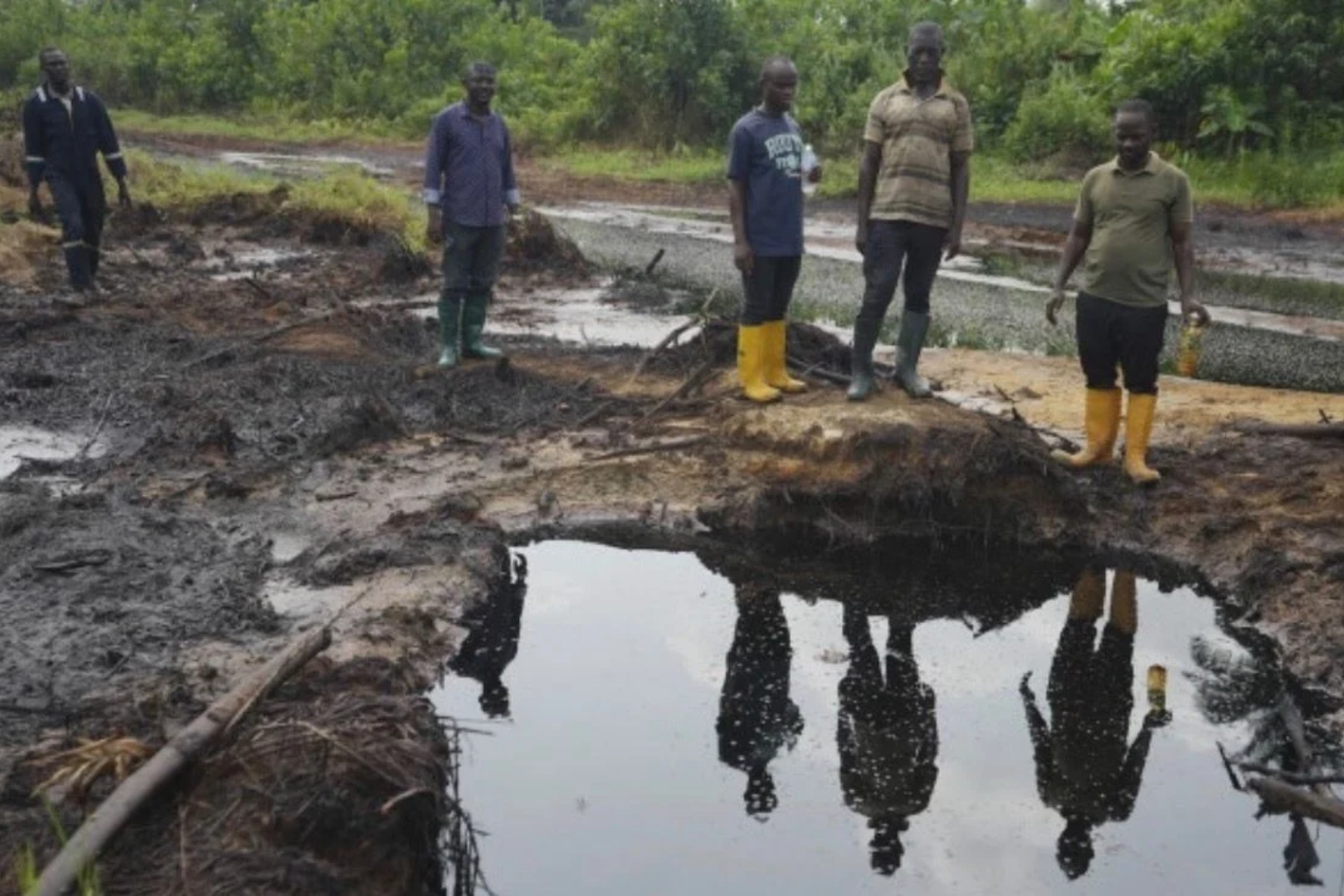
At least 37 individuals have reportedly lost their lives after inhaling toxic fumes during an alleged crude oil siphoning operation from an illegal site in Rivers State, Nigeria.
This tragic incident has brought fresh attention to the severe human implications of illicit oil theft in the Niger Delta region, with several individuals still unaccounted for.
The Youths and Environmental Advocacy Center indicated that the fatalities resulted from toxic fumes released under pressure as a group attempted to extract crude oil from a loading vessel linked to an unauthorized tapping point.
Nigerian police have acknowledged the occurrence of the incident and initiated an investigation. However, they have yet to verify the advocacy group’s reported death toll of 37 independently.
The extent of the reported tragedy is considerable.
As per the Youths and Environmental Advocacy Center, at least 37 individuals succumbed to the hazardous fumes.
Additional individuals are still reportedly missing, indicating that the total number of fatalities could change as authorities investigate and potentially discover more victims.
At this point, the figure of 37 should be viewed as a reported casualty count, awaiting official validation from Nigerian authorities.
Preliminary reports suggest that the deaths were attributed to the inhalation of toxic fumes rather than to a fire or explosion.
Victims were allegedly trying to siphon crude oil when hazardous fumes were released under considerable pressure.
Environments rich in hydrocarbons can harbor perilous gases that become especially hazardous in confined or poorly ventilated areas. The specific gases involved in this incident in Rivers State have yet to be publicly identified.
Investigators will be tasked with determining what substances were released, how the illegal operation was conducted, and the reasons for the presence of so many people at the site.
The Nigerian police have confirmed the incident while commencing an investigation into the events leading up to the deaths.
Key inquiries for investigators include how the illegal tapping operation was created and who was accountable for its oversight.
Authorities will also likely scrutinize the loading vessel involved and look into whether a broader network was associated with the operation.
Illegal oil theft in the Niger Delta often involves organized networks that manage the transportation, processing, and sale of stolen petroleum, beyond just individual efforts.
The reports of missing individuals add another layer of uncertainty to the situation.
Search and recovery initiatives may reveal whether the number of fatalities increases.
Authorities must also ascertain whether anyone who survived the incident had dangerous exposure to fumes and needs medical assistance.
Until these investigations are concluded, the complete human cost remains ambiguous.
The tragedy in Rivers State underscores Nigeria’s ongoing struggle against the theft of crude oil.
Unauthorized operatives often create illegal links to pipelines or other oil infrastructure, diverting crude for transportation, sale, or processing.
Such activities can pose severe risks to workers and surrounding communities, leading to environmental degradation and economic loss.
Tampering with pipelines can result in spills, while illicit refining introduces additional dangers from toxic substances and petroleum products.
Rivers State lies at the heart of Nigeria’s oil industry, which generates substantial income for the nation.
However, residents throughout the Niger Delta face years of environmental harm, pollution, and economic stagnation.
The presence of illegal oil operations further exacerbates these issues.
Oil spills can contaminate farmland and waterways, while damage to infrastructure threatens the livelihoods of those dependent on fishing and agriculture.
Repeated incidents of fatalities have highlighted the dangers inherent in Nigeria’s illegal oil market.
There have been previous deaths linked to leaks, illegal refining sites, and damaged oil structures.
The incident in Rivers State stands out, as deaths are believed to have been caused by toxic fumes instead of fire.
Nonetheless, this incident brings to light the extreme risks that individuals face at illegal extraction locations.
The continuation of illegal oil tapping is not simply a matter of enforcement.
Economic difficulties in parts of the Niger Delta create situations where some individuals may be willing to risk their safety for financial gains.
Criminal networks can take advantage of these conditions, posing significant dangers to those working at hazardous extraction sites.
The investigation may extend beyond those present at the site to explore potential involvement from organizers, financiers, or other criminal networks.
Oil theft carries notable economic ramifications.
Stolen crude results in lost government revenue, while infrastructure damage can lead operators to halt activities.
Costs incurred from repairs, environmental impact, and security measures add to the financial burden.
Given these impacts, Nigerian administrations have consistently regarded crude theft as both an economic concern and a security issue.
As the investigation unfolds, authorities must clarify exactly what transpired at the Rivers State site.
Critical questions to be addressed include:
- What is the origin of the crude oil?
- Who facilitated the illegal connection?
- Who owned or operated the loading vessel?
- What caused the toxic substances linked to the fatalities?
- How many individuals were present at the location?
- How many are still unaccounted for?
- Were other individuals or criminal organizations involved?
- Who financed or orchestrated the operation?
The outcomes could influence whether the investigation broadens into a more extensive inquiry into organized oil theft.
Clarity surrounding the death toll remains a pressing priority.
The figure of at least 37 deaths comes from the Youths and Environmental Advocacy Center, while Nigerian police have confirmed the incident and initiated an investigation.
However, the police have yet to verify the reported number independently.
The specific substance involved, the number of persons present, and the complete circumstances regarding the incident remain subjects of ongoing investigation.
It has been confirmed that an occurrence involving suspected illegal oil siphoning took place in Rivers State, Nigeria.
The Youths and Environmental Advocacy Center indicated that a minimum of 37 individuals died as a result of inhaling toxic fumes while allegedly attempting to siphon crude oil.
Additionally, the organization reported that more individuals may still be missing.
Nigerian police have confirmed the event and are conducting an investigation.
Nonetheless, the reported death toll of 37 has not yet been independently verified by the police.
The incident holds broader implications for Nigeria, where the oil sector remains crucial to the economy, yet local communities suffer the consequences of illegal extraction and environmental degradation.
In Rivers State, a suspected illegal attempt to acquire crude has resulted in significant loss of life.
With at least 37 individuals reported dead and others still unaccounted for, the incident underscores the perilous intersections of oil theft, poverty, organized crime, and environmental hazards in the Niger Delta.
If confirmed, the death toll will serve as a stark reminder that Nigeria’s conflict against oil theft encompasses more than just lost income and impaired infrastructure; it also includes the lives jeopardized by the illicit trade in petroleum.