
 The business organization Sakeliga has initiated legal proceedings opposing stringent Black Economic Empowerment (BEE) requirements imposed on South Africa’s communication sector.
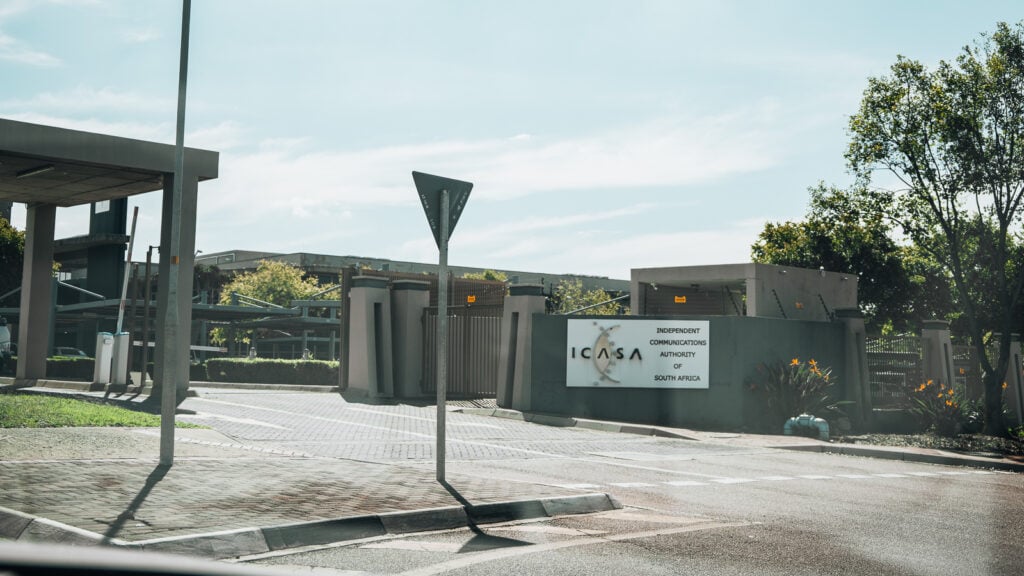
Sakeliga has submitted a challenge to the Pretoria High Court, disputing the Independent Communications Authority of South Africa’s (ICASA) implementation of racial ownership requirements affecting internet service providers and other communication entities.
The case focuses on the stipulations within the Electronic Communications Act (ECA), which mandates that individual licensees must have at least 30% ownership by historically disadvantaged individuals.
The significance of this ownership mandate has gained attention as it poses a significant barrier for companies such as Elon Musk’s Starlink trying to establish operations in South Africa.
In December 2025, Minister of Digital Technology and Communications Solly Malatsi issued a directive to ICASA to promptly assess the alignment of its ownership regulations with the ICT Sector Code.
This realignment could enable businesses to secure licenses without necessarily meeting the 30% BEE ownership condition by engaging in an Equity Equivalent Investment Programme (EEIP).
Nonetheless, in May 2026, ICASA clarified that the 30% ownership prerequisite established in the ECA remains non-negotiable without a legislative amendment.
ICASA asserted that it could not deviate from this ownership requirement unless changes are made to the Act by Parliament.
In response, Sakeliga argues that ICASA’s reading is inaccurate and aims to contest this interpretation in court.
The organization maintains that although ICASA’s licensing criteria mandate disclosure of ownership percentages, there are alternative ways to meet the requirements.
Section 9(2)(b) of the ECA indicates:
(2) The Authority must give notice of the application in the Gazette and (b) include the percentage of equity ownership to be held by persons from historically disadvantaged groups, which must not be less than 30%, or such other conditions or higher percentage as may be prescribed under section 4(3)(k) of the ICASA Act;
Sakeliga argues that the phrase “or such other conditions” implies flexibility, and ICASA’s strict application nullifies this provision.
“On ICASA’s reading, the 30% requirement becomes a rigid quota that applies to every applicant for an individual licence, implying that every application for an individual licence or licence transfer must meet the rigid quota or fail,” Sakeliga stated.
The organization further contended that ICASA’s stance prevents any business, foreign or domestic, from securing a license if it does not meet the 30% threshold, thereby limiting opportunities to provide essential services and contribute to economic growth.
No rigid quotas

Sakeliga asserts that ICASA lacks the legal foundation to maintain what it has characterized as a strict quota, arguing that the race of shareholders should not dictate the ability to provide communication services.
The organization is pushing the High Court to invalidate the racial ownership requirement, or at minimum, compel ICASA to explore equity-equivalent alternatives.
“In so doing, the state would replace a racial quota with a racial handicap, which—while remaining objectionable—constitutes an improvement over the current quota system,” it noted.
Sakeliga is specifically requesting the court to reassess ICASA’s May 2026 decision, deeming it unconstitutional and invalid.
The group seeks a ruling establishing that section 9(2)(b) does not enforce a fixed minimum of 30% ownership by historically disadvantaged individuals as a prerequisite for license issuance or transfer and allows for other stipulations to be set by ICASA.
If the court upholds ICASA’s interpretation, Sakeliga plans to argue that section 9(2)(b) is unconstitutional due to its arbitrary nature.
The lawsuit targets ICASA and its Chairperson, with the Minister referenced as the government official charged with oversight of the ECA.