
 The expenses associated with hiring a domestic worker in South Africa have risen in 2026, with the national minimum wage set at R30.23 per hour.
Despite this legal pay, many workers find it difficult to cover basic living costs.
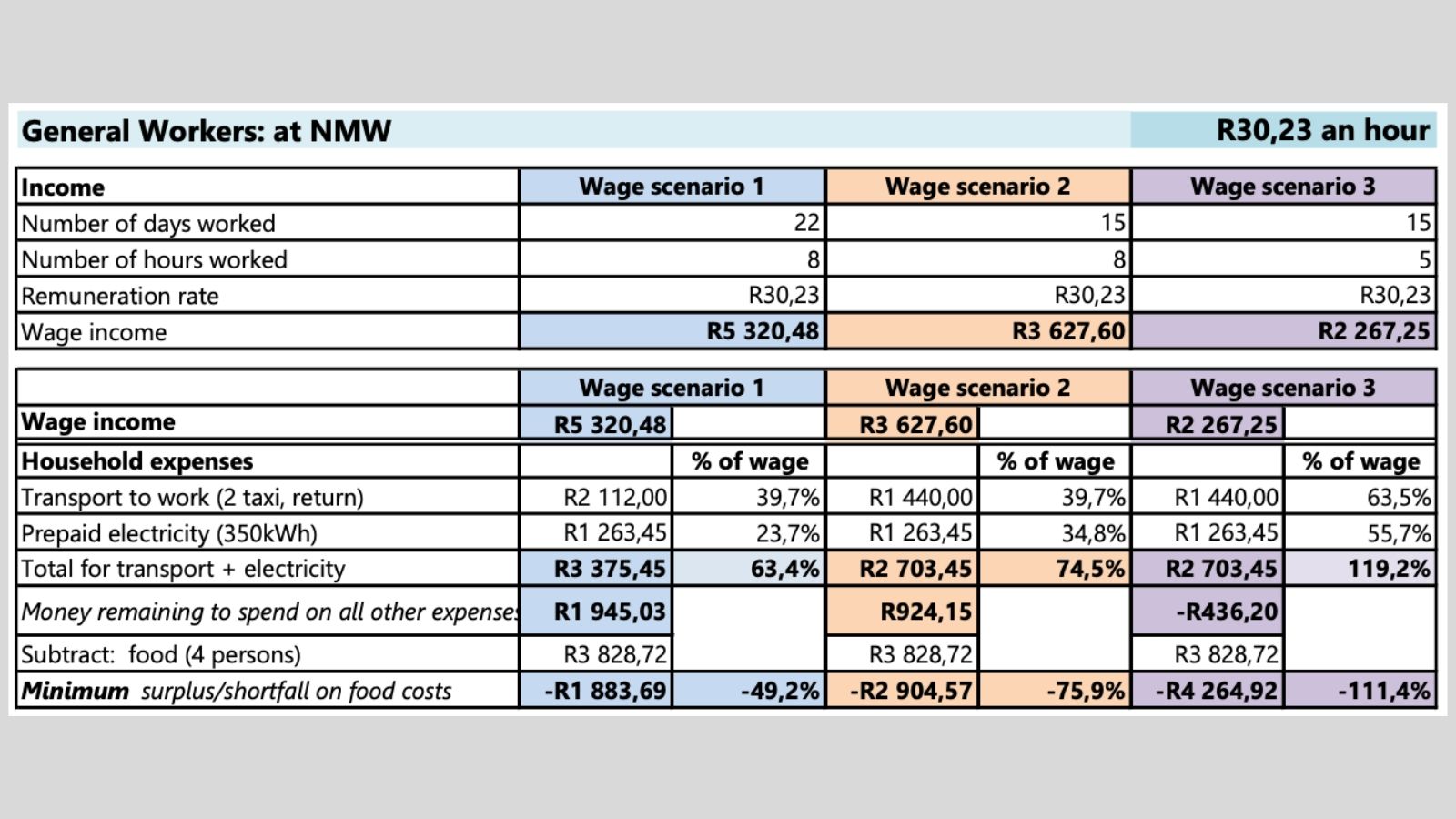
As reported by the Pietermaritzburg Economic Justice and Dignity (PMBEJD) Household Affordability Index, a worker earning the minimum wage in October 2026 would experience a monthly food deficit of nearly R1,900 after accounting for transport and electricity costs.
On 1 March 2026, the National Minimum Wage was raised by 5%, moving from R28.79 to R30.23. This equates to R241.84 for a typical eight-hour workday and R5,078.64 for an average 21 working days per month.
Nonetheless, calculations from PMBEJD for October indicated that total monthly earnings could reach a maximum of R5,320.48 based on the highest number of working days and hours.
The organization evaluated whether those receiving the minimum wage could afford essential living costs such as transportation to work, prepaid electricity, and a basic food basket for a family of four.
Using local costs for transport and electricity, it estimated that the total monthly expense for these two items would amount to R3,375.45, leaving R1,945.03 available for food.
In October, the average expense for a basic food basket for a family of four across key cities including Johannesburg, Durban, Cape Town, Springbok, and Pietermaritzburg was R3,828.72.
This situation results in a monthly food deficit of R1,883.69, representing a shortfall of 49.2%. If families were to allocate all remaining funds to food, each member would receive only R486.26 monthly.
This amount falls short by 44% of the national food poverty line of R868 per person each month, which reflects the minimum necessary to fulfill basic daily energy needs.
The PMBEJD emphasized that the national minimum wage remains insufficient because it does not cover even the essential food costs.
Additional expenses such as school fees, debt repayments, education, burial insurance, and hygiene products are not included in this estimate.
Domestic workers facing significant challenges
Domestic workers, many of whom earn at or below the minimum wage, are under considerable strain, especially as they often work part-time in multiple households.
Survey data from SweepSouth indicate that about 39% of these workers earn less than the legal minimum wage, despite laws mandating that their pay should align with the national minimum wage.
Currently, the median monthly income for domestic workers stands at around R3,635, while the cost of essential household items can exceed R4,500, creating a shortfall of nearly R900 each month.
More than 85% of domestic workers are reported to be part-time, which means that simply adhering to the minimum hourly rate does not guarantee a sufficient monthly income.
Lourandi Kriel, CEO of SweepSouth, highlighted that domestic workers often hesitate to confront their employers regarding pay issues due to their vulnerability.
“The domestic worker feels vulnerable. They don’t push for minimum wage because they just want a job. These are the most marginalised women in society,” she stated.
“They are not used to standing up for themselves. Often they will just work to put bread on the table.” When budget constraints arise, employers frequently reduce domestic work hours.
“Domestic work is very price-elastic. When there are challenges in an economy like ours, consumers either cut domestic work as a whole or they try to pay less,” the industry report from SweepSouth reveals.
Furthermore, data from SweepSouth indicates that 72% of domestic workers are unable to save money, and merely 13% have any retirement savings. About one-third are in debt, with a median debt of R3,725.
The PMBEJD asserted that the assessment of the minimum wage should focus on whether it enables workers to afford the fundamental goods and services necessary for a life of dignity, a consideration that should be addressed by employers.