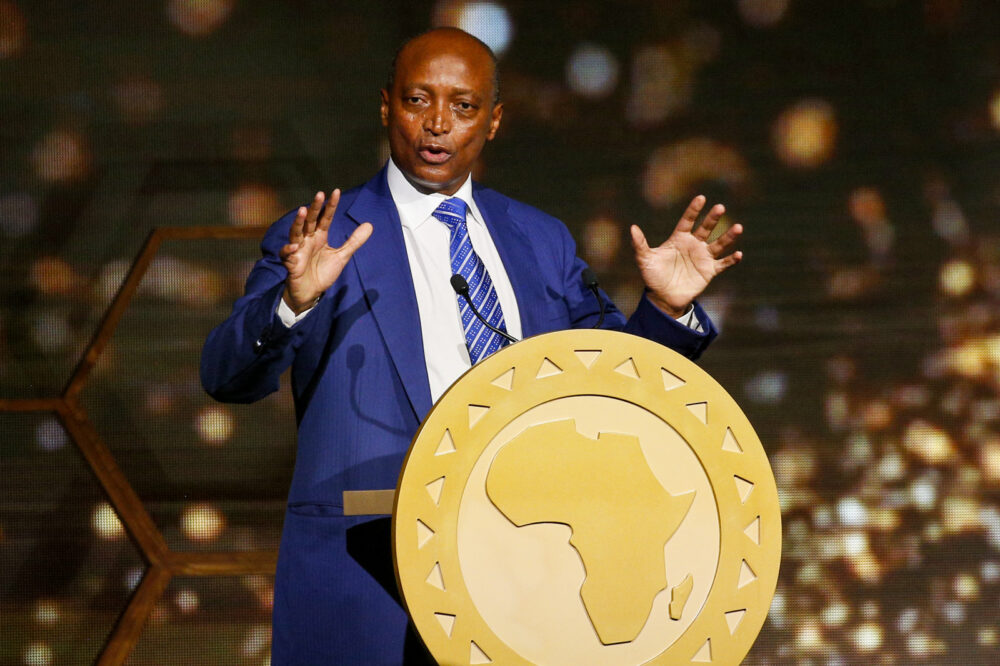

President of the Confederation of African Football Patrice Motsepe. Photo: File
The Confederation of African Football (CAF) has revealed extensive reforms to its statutes and regulations, a decision influenced by the disputes surrounding the 2025 Africa Cup of Nations Final, where Senegal lost its title following controversy.
During a media conference on Sunday, following a meeting of its executive committee, CAF outlined its plan to introduce “far-reaching changes and improvements” focused on rebuilding trust in its refereeing framework, which encompasses match officials, VAR operators, and judicial bodies. This initiative is a direct reaction to issues encountered during the AFCON final, which triggered significant doubt regarding the standards of officiating and decision-making protocols.
“CAF is implementing changes and improvements to the CAF Statutes and Regulations that will strengthen the trust and confidence in CAF referees, VAR operators and judicial bodies,” the organization stated. It further asserted that these reforms are intended to ensure that “the incidents that took place at the final match… do not happen again.”
The governing body recognized that although refereeing during the 2023 Africa Cup of Nations received praise, the situation in Morocco represented a disappointment. CAF’s goal now is to restore the credibility and respect that African refereeing had started to gain both continentally and globally.
A key aspect of these reforms is a renewed focus on the independence and integrity of CAF’s judicial systems. The organization confirmed its ongoing commitment to appointing highly esteemed African judges and legal experts to its disciplinary and appeal boards. Selection for these positions occurs through a process involving CAF’s executive committee and general assembly, driven by nominations from 54 member associations and regional unions.
CAF President Patrice Motsepe indicated that the changes are influenced by both African and international legal expertise to ensure compliance with global football standards. “These changes will strengthen the trust and confidence in CAF referees, VAR operators, match commissioners and judicial bodies,” Motsepe stated. “They will also ensure that the unacceptable incidences that took place… do not happen again.”
He also mentioned that CAF is collaborating closely with FIFA to enhance the training of referees and VAR officials throughout the continent. He highlighted the necessity of professionalizing these functions and improving compensation, allowing African officials to compete on par with their global counterparts.
The reforms are part of a broader governance initiative within CAF, with Motsepe asserting that “significant progress” has been achieved in the last five years. He reiterated the organization’s unwavering stance against corruption and misconduct, noting that these measures have been effective in attracting new sponsors and partners.
Furthermore, Motsepe stressed CAF’s commitment to impartiality among its member associations. “Under no circumstances will any member association be treated preferentially,” he stated, emphasizing the body’s plan to enforce its regulations uniformly across the continent.
As the repercussions from the AFCON final remain ongoing, with certain elements now before the Court of Arbitration for Sport, CAF has signaled that its immediate priority is to stabilize and enhance its competitions. This includes the current CAF Champions League and CAF Confederation Cup, along with assisting African teams as they prepare for the 2026 FIFA World Cup.