
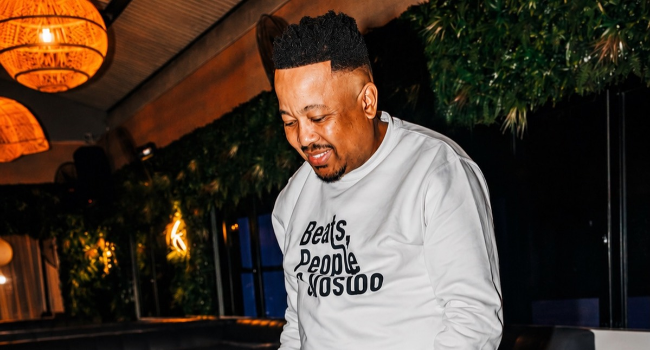
DJ Zan-D Explains His Decision to Withdraw Support for a Specific Political Party in the 2026 Local Elections. As South Africans prepare for the 2026 Local Government Elections, DJ Zan-D has publicly announced his decision to no longer support a political party due to municipal regulations he contends have made life harder for those in the entertainment sector.
 DJ Zan-D Reveals Why He’s Withdrawing His Vote From A Particular Political Party In The 2026 Local Elections
The experienced DJ, radio host and producer shared his thoughts on social media about his challenges in the entertainment industry while under the management of this unnamed party. He asserts that restrictive event regulations and an overload of rules have generated unnecessary barriers for entertainment professionals seeking to earn a living.
“Having worked in the entertainment industry for years, I’ve experienced firsthand how this one particular party made life difficult for us through restrictive event bylaws and excessive regulations in the metros they governed, making it harder for us to earn a living. I will not vote for a party that has made our lives unnecessarily difficult. There’s a difference between maintaining order and making it unnecessarily difficult for people to earn a living,” he wrote.
His remarks come as roughly 29 million registered voters prepare to cast their ballots, with elections taking place at over 23,000 voting sites across the country from 07:00 to 21:00. The results will influence who leads South Africa’s metropolitan, district, and local municipalities in the upcoming five years.
For Zan-D, the situation is particularly significant. Having dedicated over twenty years to establishing his reputation in the South African music scene, radio, and nightlife, he fully comprehends the hurdles encountered by individuals reliant on the entertainment industry for their livelihood.
His portfolio includes being a prominent voice on YFM, acting as a resident DJ for e.tv’s Club 808, and playing a vital role in promoting local music and upcoming artists through both radio platforms and club scenes.
While he refrained from naming the political party, his statements raise important discussions regarding how local regulations impact those who drive South Africa’s entertainment industry. Regulations concerning event permits, noise control, and compliance can significantly affect DJs, promoters, venue operators, and event planners.
Certainly, regulations are necessary to safeguard communities, ensure public safety, and uphold order during events. Nonetheless, Zan-D emphasizes that there is a crucial distinction between implementing required regulations and creating obstacles that hinder industry professionals from making a sustainable income.
As the local elections will shape future municipal policies and priorities, his sentiments introduce an entertainment perspective to the broader dialogue around governance, responsibility, and economic prospects.
As the nation prepares to vote, Zan-D’s viewpoint underscores the influence of experiences outside typical political discussions on individuals’ voting decisions. For him, the treatment of those in the entertainment field remains a significant factor in determining his voting preference.