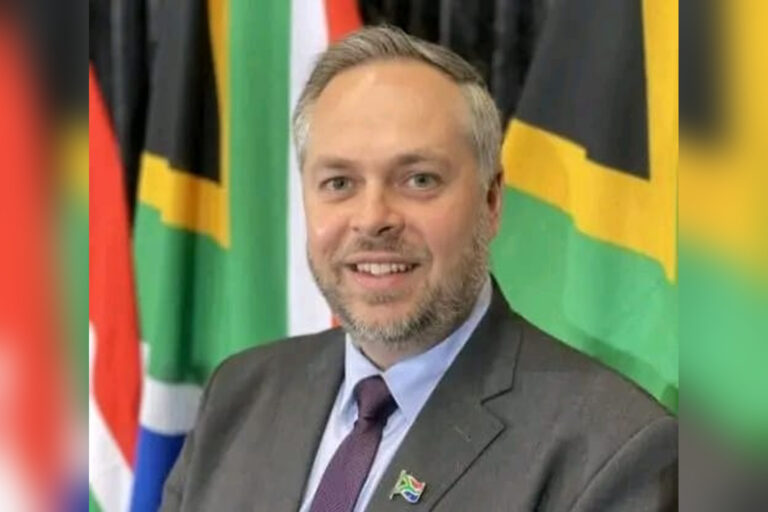

Andrea Johnson, the former head of the Investigating Directorate Against Corruption (IDAC), has made a notable acknowledgment during her testimony at the Madlanga Commission of Inquiry. Under questioning, she admitted that the investigation by the Political Killings Task Team (PKTT) was outside the statutory scope of IDAC.
This admission follows her earlier recognition that certain IDAC investigations exceeded the legal boundaries set for the unit.
Johnson’s latest statements are expected to be key in the commission’s evaluation of whether IDAC operated within its legally established powers and whether there was adequate oversight when launching prominent investigations.
These acknowledgments have heightened scrutiny of IDAC’s investigative practices and decision-making processes.
Some analysts suggest that these revelations raise concerns about whether certain investigations were conducted without the necessary legal authority, but the Madlanga Commission has yet to conclude its inquiry.
The commission will ultimately decide how much weight to place on Johnson’s testimony, with further IDAC investigators set to provide evidence in the near future.
During the proceedings, evidence leader Advocate Mahlape Sello prompted Johnson about several documents that the inquiry has been seeking.
Johnson informed the commission that obtaining documents has become a challenge since her departure from IDAC.
She directed the commission to Mathews Sesoko, IDAC’s current head of investigations, who is now responsible for handling access to these documents.
Johnson discussed various IDAC cases related to SAPS investigators, specifically mentioning the Valerie, Mokwele, Khumalo, Madondo, and Langlaagte cases, which she indicated were relevant to the inquiry.
When questioned about how the appointment of General Dumsani Khumalo by former Police Minister Bheki Cele fit within the Independent Police Investigative Directorate (IPID) scope, Johnson clarified that the issue pertained to the appointment process rather than the vetting process.
Advocate Sesi Baloyi highlighted that this matter fell under IPID’s investigative authority and asked if it had been explored. Johnson replied that she was unaware of any investigation into the issue.
When Baloyi inquired why Johnson had not investigated the matter, Johnson said it was part of the investigation’s authorization.
Baloyi countered that this was the one allegation that indeed lay within IDAC’s jurisdiction, should it prove valid.
Baloyi expressed curiosity over why IDAC overlooked this specific allegation while pursuing other claims that were clearly outside its jurisdiction.
Challenging this oversight, Baloyi suggested that it could not be a simple mistake, implying instead that the issue may have been disregarded due to its inconvenient nature or was intentionally left out of the investigation focus.