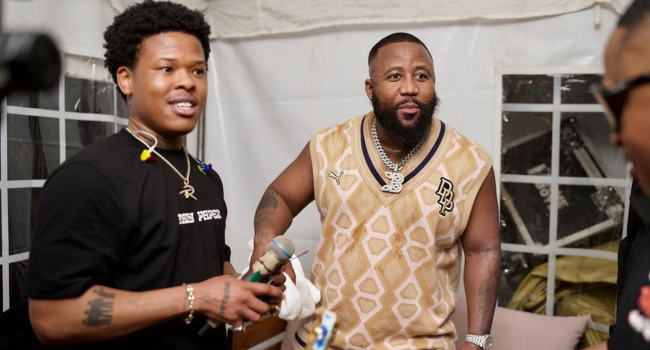
‘Worst Thing for SA Hip-Hop’ Cassper & Nasty C’s Friendship Draws Mixed Reactions From Hip-Hop Fans. Just when South African hip-hop seemed to have covered all possible topics, a new, intense discussion has emerged on social media. This time, the focus is on two of the genre’s leading figures, Cassper Nyovest and Nasty C, following remarks made by podcaster and commentator Mswenko Franko, which promptly ignited heated discussions across online platforms.
 ‘Worst Thing for SA Hip-Hop’ Cassper & Nasty C’s Friendship Draws Mixed Reactions From Hip-Hop Fans
A clip posted by The Hype Channel shows Franko making a bold assertion that the friendship between Cassper and Nasty C has negatively impacted SA hip-hop. His confident delivery, accompanied by visuals of the two artists, quickly circulated online, prompting fans to respond passionately in defense of their favorites.
This comment touches on ongoing debates within the musical community. For some, it raises questions regarding artistic growth, commercial pressures, and whether the genre has strayed from its foundational elements. Others view it merely as a provocative statement intended to generate controversy.
Nasty C’s supporters quickly pushed back against the criticism.
Many cited his international success as evidence that the critique overlooks key points. Fans highlighted his connections to global audiences and impressive streaming figures, even referencing Drake as a touchstone of international acclaim. To them, breaking into new markets and expanding their reach is something to be applauded, not criticized.
Others contended that attributing the challenges in the genre to friendships fails to address larger issues. One fan questioned where the critics’ favorite artists were, suggesting they should rethink their stance if they believed SA hip-hop needed intervention. Another pointed out that if personality-driven success was a concern, similar critiques should have been aimed at icons like AKA during their high points.
Yet, not everyone engaged with the discussion seriously.
A segment of the audience dismissed the entire situation as merely a strategy for clout, prioritizing engagement over sincere dialogue. Some noted that drawing comparisons between local talent and global stars, without acknowledging the vast marketing efforts that support those superstars, creates an unfair perspective. According to these viewers, streaming success often mirrors promotional strength and backing from the industry as much as it does musical ability.
Meanwhile, others expressed fatigue with this ongoing cycle of discourse. For many, this controversy represented yet another episode in hip-hop’s continuous culture battles. However, a few skeptics remained unconvinced, voicing concerns about Nasty C’s creative direction and whether it still aligned with the core of South African hip-hop.
This conversation underscores a persistent identity dilemma within the genre. Should artists maintain strong ties to local sounds and cultural traditions, or strive for global relevance and economic success? Cassper Nyovest and Nasty C have come to symbolize these conflicting viewpoints. One is a well-established force who has built a legacy through local prominence, while the other represents a new wave of artists seeking to transcend international barriers.