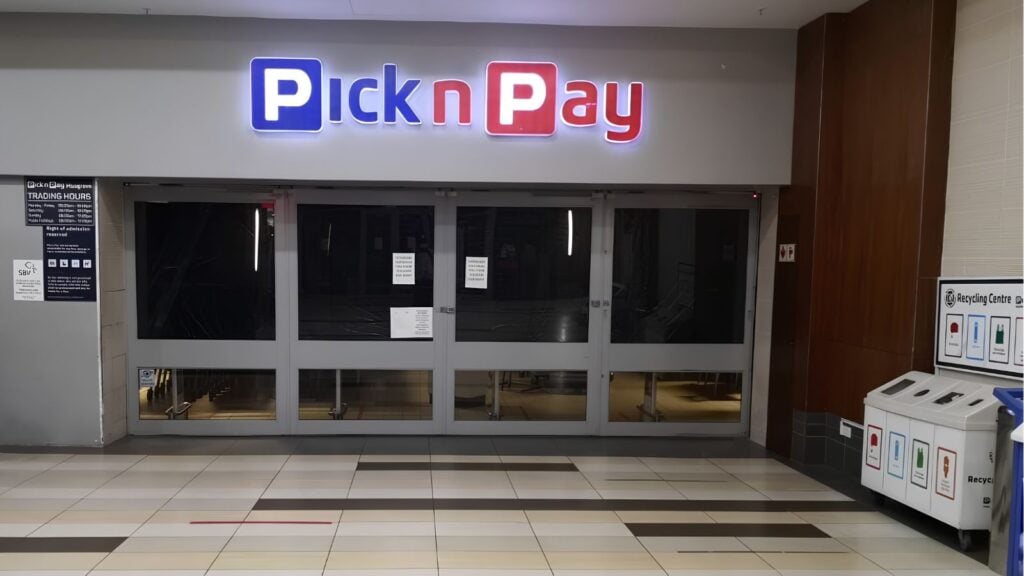
 Pick n Pay has shut down 284 stores across South Africa and its various markets since Sean Summers resumed his role as Group CEO in September 2023. The company is implementing a focused turnaround strategy aimed at improving its financial performance.
This approach marks a departure for Pick n Pay, which has been challenged by a surplus of underperforming outlets that have contributed to significant financial losses.
Upon his return in September 2023, Summers rolled out a six-pillar turnaround plan, prioritizing a reassessment of the store network.
The aim is to shift the focus from an aggressive growth model to a more sustainable operation centered on a manageable number of stores that can yield consistent profits.
In the group’s most recent interim results, which cover the 26 weeks ending August 30, 2026, Pick n Pay indicated it had closed an additional 20 stores, comprising 15 owned by the company and five franchise locations.
These shutdowns have taken place gradually over multiple reporting cycles. In 2024, the company closed 53 stores in total, which included 20 company-owned and 33 franchise stores. Additionally, five locations underwent conversions.
The next financial year saw a further 103 store closures, split between 55 company-owned units and 48 franchises, while 34 were converted from their previous formats.
In 2026, Pick n Pay confirmed the closure of another 108 stores, including 39 owned by the company and 69 franchise outlets, along with the cessation of its franchise agreement in Namibia, resulting in 36 store closures. Moreover, 42 stores were converted during that year.
Throughout these reporting periods, 118 of the closed stores were identified as Pick n Pay supermarkets and hypermarkets.
Summers emphasized that the company is intentionally moving away from its earlier expansion strategy.
“Moving forward, the Group’s focus for Pick n Pay will not be ‘scale-at-all-cost’. We will focus on being a smaller but more profitable business in the short term, with fewer but better stores,” he said.
“This will ensure long-term sustainability and generate genuine growth opportunities in the future.”
The group is starting to see results
 Pick n Pay CEO Sean Summers
The review of the stores involved a detailed analysis of locations that were not profitable, assessing whether they could be made viable again.
Management explained that the review sought to uncover the reasons behind poor performance and the potential for revitalizing individual stores.
“Certain loss-making stores are not suitable for conversion to Boxer or Pick n Pay franchise stores and will be closed,” the group explained.
The company noted that, in some cases, the terms of existing leases and associated costs made closure a more favorable option than maintaining operations. The aim was also to minimize competition among its various brands.
Pick n Pay is increasingly focusing on middle-income and higher-end consumers, while Boxer caters to lower-income segments.
Management observed that some underperforming Pick n Pay stores could be transitioned to Boxer, helping mitigate losses and support Boxer’s growth.
The restructuring efforts are starting to yield positive outcomes. In the latest interim financial results, Pick n Pay reported a 16.9% reduction in trading losses, down to R516 million from R621 million during the same timeframe last year.
The gross profit margin improved from 16.8% to 17.5%, with company-owned supermarkets achieving a 2.4% increase in like-for-like sales, exceeding internal price inflation of 1.5%.
Group trading profit rose by 58.1% to R490 million, while the headline loss decreased by 31.9% to R299 million. The group also disclosed R10 billion in net cash, with R7.7 billion held within Pick n Pay.