CAF has issued a slate of heavy suspensions and fines totalling more than $1 million. (X)
The consequences of the 2025 CAF Africa Cup of Nations (AFCON) final are beginning to take shape, revealing the extent of the turmoil that occurred during the event. The financial penalties are significant.
The Confederation of African Football (CAF) has imposed substantial fines and suspensions on both Senegal, the new African champions, and the host nation Morocco, totaling over $1 million (approximately R15.7 million).
These penalties, announced by the CAF Disciplinary Board on Wednesday, highlight the disarray of a final that turned contentious, overshadowing the intended celebration of African football.
Senegal Faces Severe Penalties
Senegal emerged victorious with a 1-0 extra-time win in Rabat a fortnight ago; however, their actions during the match have resulted in significant financial repercussions. The Fédération Sénégalaise de Football (FSF) has been fined $615,000 (R9.6m) for various infractions, including the “improper conduct” of fans and the “unsporting behaviour” of the coaching staff.
The most significant individual punishment was directed at Senegal head coach Pape Bouna Thiaw, who received a five-match suspension and a $100,000 (R1.57m) fine for actions deemed to have “brought the game into disrepute.”
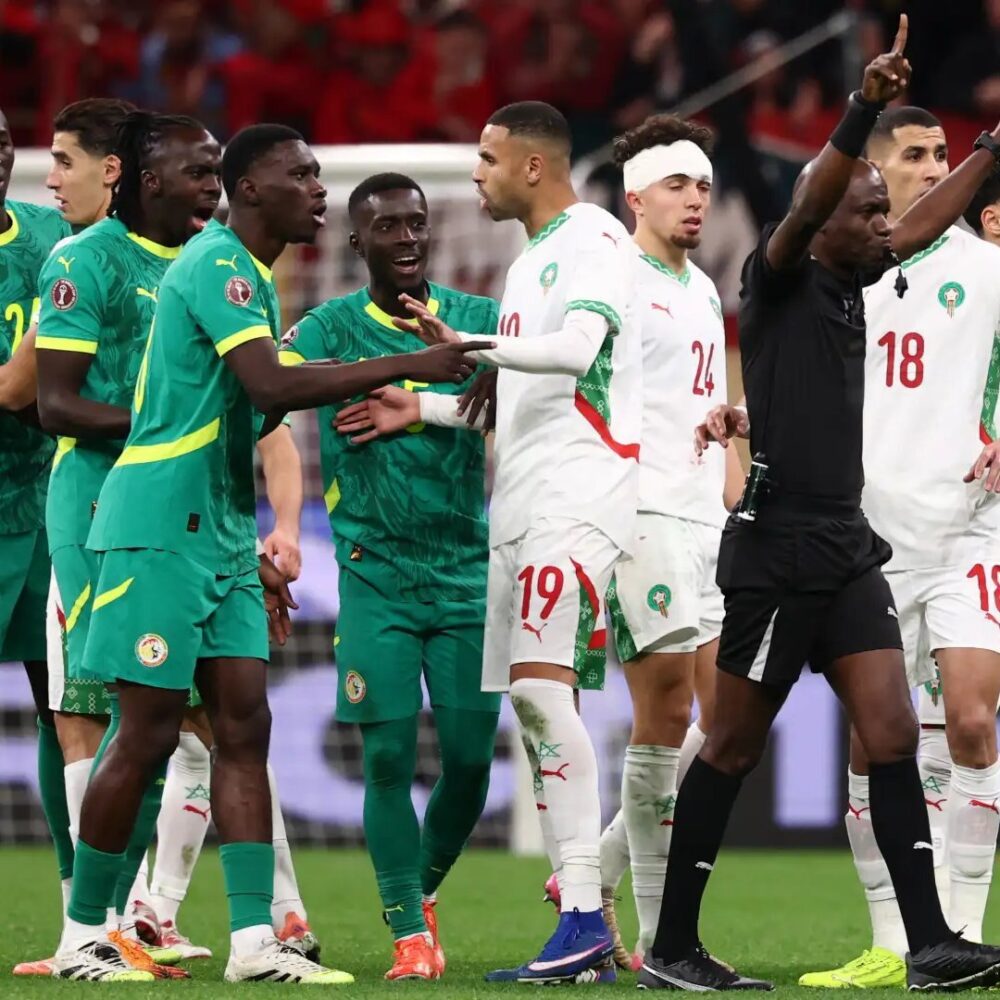
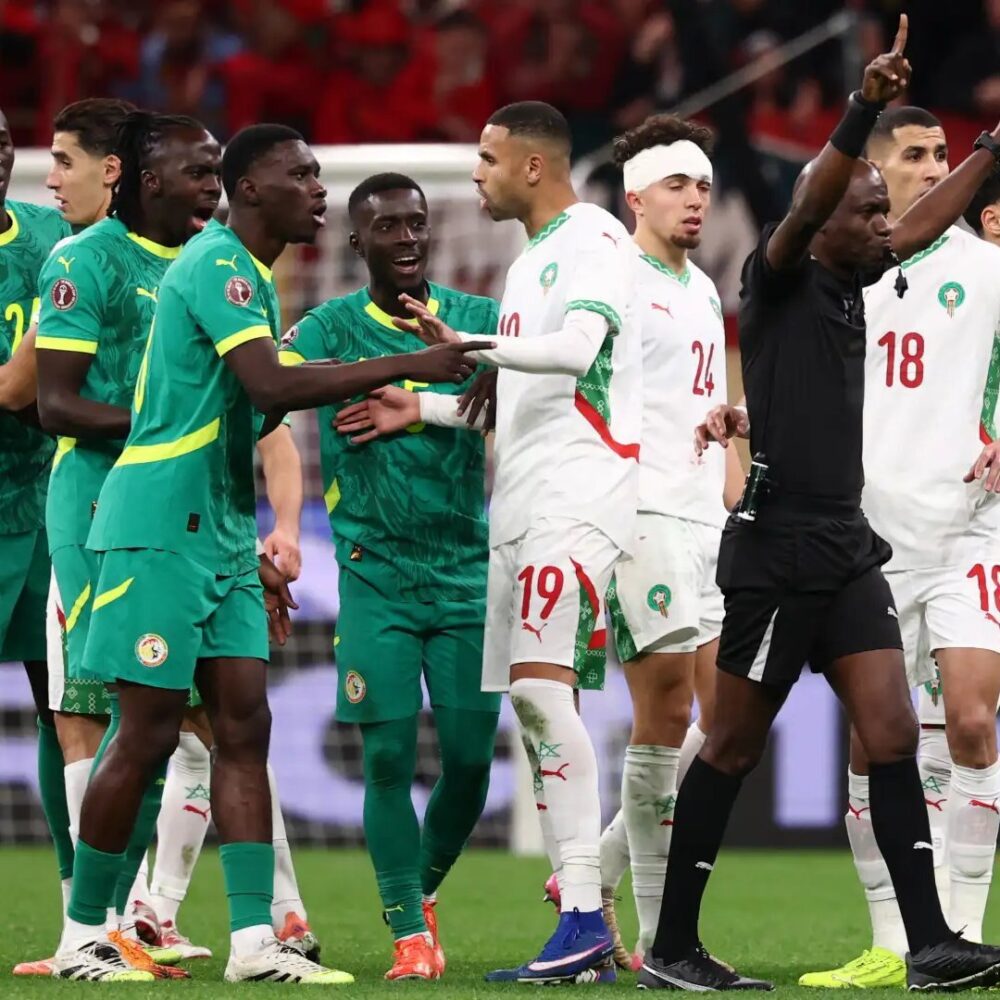
Disciplinary actions extended beyond the coaching staff. Players Iliman Ndiaye and Ismaila Sarr were each handed a two-match suspension for their aggressive interactions with referee Jean-Jacques Ndala, a tense moment that arose from a controversial VAR-awarded penalty that almost led to an early Senegalese exit from the match.
Meanwhile, Morocco faced its own set of penalties as it aimed to demonstrate its organizational capabilities for future international events. The Féderation Royale Marocaine de Football (FRMF) was fined $315,000 (approximately R5.1m), which included a notable $200,000 penalty for the “inappropriate behaviour of ball boys.”
In addition, CAF penalized the FRMF for permitting players and staff to interfere in the VAR review area, obstructing match officials, an action that compromised the sport’s integrity.
On the field, Morocco’s star defender Achraf Hakimi received a two-match ban, which is suspended for one year, while midfielder Ismaël Saibari faced a harsher penalty with a three-match suspension and a personal fine of $100,000.
To further exacerbate matters, Morocco’s appeal regarding alleged misconduct by Senegal was dismissed by the Disciplinary Board, effectively concluding the legal dispute.
Diplomatic Efforts Amidst Tensions
The severity of the sanctions is a reflection of the chaotic environment in Rabat on Sunday, January 18. Following the contentious penalty decision, unrest escalated from the pitch into the stands as Senegalese fans clashed with Moroccan security forces, resulting in 18 arrests.
The aftermath prompted urgent diplomatic measures, as the leaders from both nations sought to prevent the “regrettable incidents” from damaging long-standing relations.
Senegal’s Prime Minister, Ousmane Sonko, who spoke from Rabat shortly after the final, described the events as “deplorable” and “painful,” but urged against exaggerating the situation. He characterized the incidents as emotional responses driven by passion rather than political or cultural divisions.
This entailed a careful diplomatic balancing act. While Senegal’s President Bassirou Diomaye Faye congratulated his team and expressed gratitude to Morocco for hosting, Morocco’s Prime Minister Aziz Akhannouch refrained from explicitly congratulating Senegal, though he highlighted the strong ties between the two nations. Senegal continues to be an important ally for Morocco, particularly concerning issues related to Western Sahara.
King Mohammed VI, aiming to preserve the positive narrative of the tournament, stated that the disorder would not detract from “African fraternity.”
Despite these statements, ongoing legal pursuits by the Moroccan federation and FIFA President Gianni Infantino’s public criticism of Senegalese conduct imply that the final of the 2025 AFCON will likely be recalled more for its aftermath than the football played.