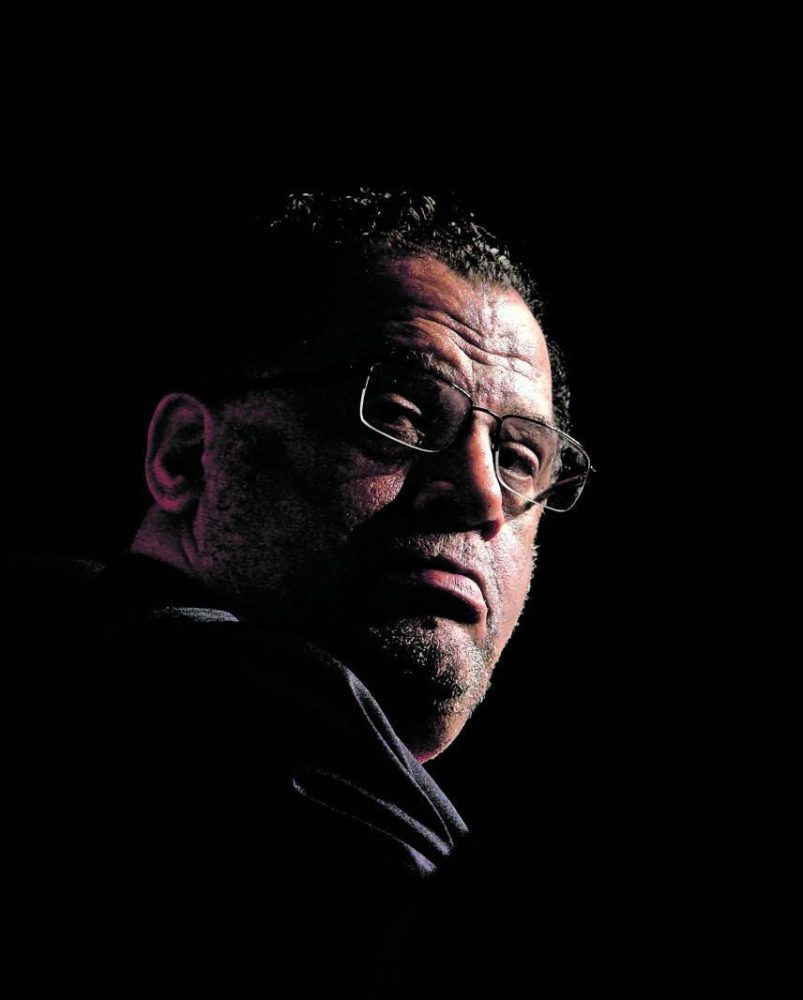
Own goal: Safa president Danny Jordaan made what he called a ‘payment’ to football development. He is now charged with fraud between 2014 and 2018. Photo: Alex Grimm/Getty Images
On a scorching January day in 1996, I strolled along the edge of Soccer City with Danny Jordaan. We were accompanied by the journalist Ian Hawkey, who would later become a close friend, and the conversation flowed easily. Jordaan’s friendliness was notable.
Even now, he remains a remarkably friendly individual—so much so that if there were a level of friendliness beyond what we typically experience, a sort of hyper-amiability, Jordaan would exemplify it. This demeanor led my colleagues and I at the Sunday Times in Johannesburg to humorously call him not “Captain Amiable” but — prepare yourself — “the lugubrious walrus.”
During the early months of 1996, Jordaan had ample reason to feel satisfied. Kenya was unable to fulfill its role as host for the 1996 Africa Cup of Nations, allowing South Africa to step in with remarkable fortune.
As a result of this hosting opportunity, South Africa was automatically qualified for the tournament — remarkably, using rugby stadiums in places like Bloemfontein and Port Elizabeth for the impending football matches.
Jordaan was prudent in his speech throughout those years, a habit that persists, but he did express a few significant opinions during that time, notably that South African football required dedicated stadiums. Only once those facilities were available could football break free from its historical ties to rugby and, by extension, apartheid.
At that time, South Africa had completed three matches in their qualification group when the announcement of their new hosting role was made. These matches consisted of 1-0 victories against Madagascar and Mauritius, along with an away draw against Zambia, known as the homeland of King Kalusha Bwalya.
Despite a favorable position, it was by no means assured that Bafana Bafana — as they were beginning to be referred to — would qualify. Zambia and Gabon were both ahead of them in the standings when the news broke that Kenya would not be able to host the tournament.
Thus, Jordaan had every reason to feel buoyant that warm January afternoon in 1996. His mood would only improve as the tournament unfolded. South Africa triumphantly defeated Cameroon, a notable team in African football at that time, with a score of 3-0 in their opener, igniting hope among the players and the country that bordered on hysteria.
The knockout stages commenced, and even a slim victory over Algeria during a rain-soaked Saturday afternoon could not dampen the high hopes of South Africa. When Ghana was decisively beaten 3-0 in the semi-final, it seemed that we were allowed to imagine the unimaginable.
South Africa’s journey was facilitated by the absence of Nigeria.
Nelson Mandela had publicly condemned the execution of Ken Saro-Wiwa, a Nigerian environmental activist, under the Sani Abacha regime. In retaliation, Abacha withdrew Nigeria, the reigning champions, from the tournament. For Bafana Bafana, facing Nigeria would have been necessary to seize their title.
Instead, Bafana Bafana faced Tunisia in the finale. In the latter half, Doc Khumalo delivered a perfectly sliced diagonal pass to substitute striker Mark Williams, who scored, making it 2-0 for the home team. The Cup was making its way as far south as the continent would allow.
These were exhilarating times for South Africa, South African football, and the ever-affable Jordaan. The rand remained relatively strong and residents often spoke of the charming idea of the “Rainbow Nation.” Teams from Germany, England, France, the Netherlands, and Brazil — a personal favorite of Jordaan’s — made the journey to South Africa or welcomed us to theirs for friendly matches. It was a close contest in terms of who attracted more attention during those days: Mandela or the likes of Bebeto, Dunga, and Romario. Regardless, Brazil were convinced to come for the Nelson Mandela Challenge, held in April 1996.
David Elleray, one of the world’s leading referees, officiated the game. The match began 20 minutes late because South Africa’s vice-president, Thabo Mbeki, arrived at Soccer City behind schedule.
South Africa was the first to score, with Phil Masinga netting a header. They were competitive until, out of nowhere, they found themselves on the losing end, finishing the match at 2-3. Eighteen months later, Bafana lost to Brazil in a friendly match by a single goal. There was no shame in that; Brazil consistently outplayed many teams during the late 1990s.
Jordaan was at the helm of an association that took its responsibilities seriously, overseeing a national team that held itself to a high standard. These were not ideal times — South Africa’s disappointing performance in the 1998 World Cup in France attested to that — but the country’s football was, if not leading the pack, dedicated to ensuring it was not left behind.
This status propelled South Africa, under Jordaan’s leadership, to bid for the 2006 World Cup. The specifics of the enigmatic dynamics surrounding international football politics leading up to the 2000 vote remain somewhat unclear, but one thing is certain: New Zealand delegate Charles Dempsey, a golf enthusiast with a Hobbit-like demeanor, was instructed by his association to support South Africa.
Amid rumors of dubious dealings and late-night maneuvering, Dempsey disregarded Oceania’s mandate and chose to abstain. His abstention resulted in a tie between Germany and South Africa for the hosting rights of the 2006 tournament. In stepped Sepp Blatter, another member of the amiable crew, who cast the deciding vote in favor of Germany.
Jordaan and his fellow bid team members—Michael Katz, Koos Bekker, and Irvin Khoza—dusted off their disappointment and embarked on new travels, accumulating frequent flyer miles in their quest to host the World Cup once more.
A few years later, during South Africa’s bid for the 2010 World Cup, I recall waiting for Jordaan at Grenada airport in the Caribbean while he campaigned for South Africa. He was arriving from Trinidad, where he had endured what I imagined were some challenging days with the controversial Jack Warner.
Although Jordaan was aware I was in Grenada for the Sunday Times, he had no idea I would be waiting at the airport to greet him. As he collected his bags and made his way through passport control, I spotted him in his characteristic dark, slightly worn-out suit.
He appeared a bit pale. Whether it was due to exhaustion, anxiety about flying, or an aftereffect of his time with the money-driven Warner, I never discovered.
At the airport, he managed to evade me, but we did agree to meet at the luxurious golf resort where he was staying. When the time came, beneath gently swaying palm trees, Jordaan passed by in a golf cart, directing traffic to his next appointment. I felt as though I was unintentionally thrust into a Steve Martin film. Maintaining an amiable demeanor was essential.
I trailed him by foot as he navigated the golf course in his cart. I hurried after him to the seventh hole, notebook in hand, and pursued him to the eighth. He zipped over a small bridge to the tenth hole.
The reason for our presence in Grenada was that the Confederation of North Central American and Caribbean Football Associations was holding its annual meeting there. With only a month until the voting for the 2010 World Cup host, Jordaan was eager to engage in final persuasive efforts.
Getting Mandela to mingle with Warner in Trinidad was part of the strategy, but now Jordaan needed to convince the confederation delegates why they should encourage Warner and his associate, the significant Chuck Blazer, to cast their votes for South Africa.
It might have appeared straightforward. After Germany secured hosting rights over South Africa for the 2006 World Cup, Blatter assured the world that the following World Cup would take place in Africa. With Morocco and Egypt presenting strong proposals, Jordaan was taking no chances.
So here we were, Jordaan, myself, and Blazer and his wife, sipping tea and engaging in World Cup chatter so minuscule it was nearly imperceptible. Regardless of their ethical standing, all journalists contend with the issue of reputation bias, especially when dealing with those who have much to conceal. At that time, I was unaware that Chuck had been profiting from football for years. He had a lot to hide.
Following South Africa’s successful bid to host the 2010 World Cup in Zurich in 2004, Jordaan became increasingly difficult to reach. He was perpetually elsewhere, utilizing two passports that were nearly filled. If he wasn’t off to one location, he was just returning from another.
In light of this challenge, we devised clever ways to connect with him. One of us would call him under the pretense of discussing a subject other than World Cup preparations, perhaps the Champions League, innovations in football technology, or the race for the English Premiership title.
Jordaan would be swept away by his passion for the sport, responding with candidness, thoughtfulness, and engagement. Conversations about football in general would lift his spirits, and we would then stealthily weave World Cup inquiries into our dialogue.
We could have never predicted that Jordaan’s aspirations and reputation would soon begin to tarnish.
Look out for The Luke Alfred Show, Luke’s weekly podcast on all matters sporting with an edge of mischief. They’re available on Spotify, Apple podcasts and YouTube. Feel free to become a paid subscriber via Patreon