In a healthcare system that is stretched thin, overlooking a warning sign or experiencing a delay can jeopardize a patient’s life.
This concern is not theoretical; it is a situation faced by many.
In South Africa, clinical teams are burdened by high patient numbers and overlapping symptomatology, complicating the process of making timely and accurate clinical decisions.
Artificial Intelligence (AI) has the potential to mitigate some of these challenges—not by substituting healthcare professionals, but by enhancing their efficiency and safety.
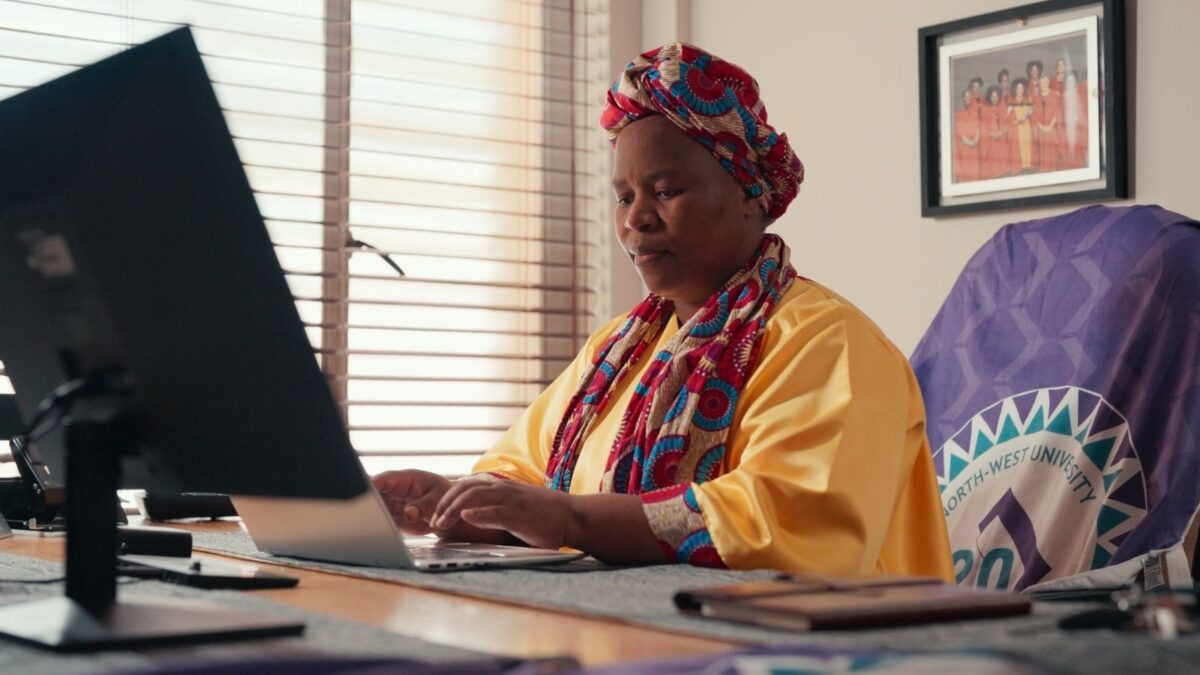
“AI in healthcare acts like a highly intelligent digital assistant that helps our overstretched doctors and nurses with the heavy lifting,” states Prof. Sabelile Tenza, an Associate Professor and Expert in Patient Safety and Healthcare Quality at North-West University (NWU).
By examining medical records, imaging, and vital sign trends, AI can quickly provide relevant information, allowing clinicians to devote more time to actual patient care.
“It is not here to run the clinic, but to give healthcare workers their time back,” she further explains.

The potential advantages could be vital when patients exhibit symptoms indicative of various illnesses.
Prof. Tenza recounts the scenario of a patient arriving at an overcrowded clinic in rural South Africa, presenting with a high fever, profuse sweating, and body aches.
These symptoms could suggest malaria, typhoid, or severe influenza, placing immense pressure on the clinician to arrive at a swift conclusion.
“The overburdened health system is the exact challenge that drove my interest in AI,” she notes.
“We need tools that can evaluate a patient’s history, local outbreak data, and vital signs concurrently to assist the clinician in quickly ruling out erroneous diagnoses. AI can provide healthcare workers with a data-driven second opinion right at the bedside, ensuring timely and appropriate treatment for patients without the risk of dangerous delays.”
At NWU, research is concentrated on incorporating digital health tools into care, especially in resource-deficient public clinics in North West province.
“Another key area of focus is developing practical digital safety nets for frontline healthcare workers while incorporating public feedback in AI’s application within healthcare,” Prof. Tenza remarks.
Patient safety involves guaranteeing that healthcare is healing rather than harmful by minimizing errors, safeguarding patients, and allowing staff to voice concerns before risks escalate.
“In practice, it encompasses everything from ensuring that the right patient receives the exact dose of medication to guaranteeing that medical records don’t go missing when a patient is transferred from one facility to another,” Prof. Tenza explains.
AI could enhance these safety measures by functioning as an alert system. In a bustling ward, it could recognize changes such as an increase in heart rate and a drop in blood pressure, notifying staff of potential sepsis risk before a patient deteriorates.
However, Prof. Tenza highlights the importance of not placing blind trust in technology.
“My background makes me both incredibly excited about AI and deeply cautious,” she says. “I view AI strictly as a supportive tool, not the final decision-maker.”
While AI may manage administrative duties, assist with basic triage, and identify risks, the responsibility for patient care decisions lies with clinicians.
“AI can process millions of data points in a second, but it completely lacks a heartbeat,” Prof. Tenza illustrates.
A machine cannot comfort a distressed patient, hold a crying mother’s hand, or comprehend the cultural context of life in South African townships or rural villages.
Nonetheless, alleviating time-consuming tasks could allow healthcare providers to spend more time listening, explaining, and expressing empathy.
“It doesn’t replace the clinician; it restores the human side of medicine,” she states.

Achieving the full potential of AI will necessitate safeguards, adequate training, and accountability.
Prof. Tenza underscores the importance of safeguarding patient data under the Protection of Personal Information Act (POPIA), as well as ensuring that AI systems are relevant to South Africa’s healthcare environment and genetic diversity.
Systems primarily trained on European or American medical datasets may fail to adequately represent local populations, leading to concerns over clinical bias.
“Our future health graduates need to grasp both the remarkable capabilities and the clear limitations of AI,” Prof. Tenza asserts. “They must know how to identify algorithmic errors, understand data privacy legislation, and feel empowered to question a machine’s suggestions.”
For patients, responsible AI application could significantly alter their healthcare experience.
“Imagine walking into a public community health center and not having to wait for eight hours just to receive a basic X-ray interpretation. Instead, AI could analyze the image immediately, notify the physician if there’s an urgent issue like a fracture or tuberculosis, and facilitate treatment much more swiftly,” she conveys.
In isolated regions, AI could also provide diagnostic support to communities that currently have restricted access to specialists.
“Years down the line, I want our healthcare professionals to feel supported by technology rather than overwhelmed by their workloads,” Prof. Tenza concludes. “I want our patients—regardless of their income or location—to enter a clinic with the assurance that they are entirely safe, backed by both human empathy and advanced digital safety protocols.”
Learn more about North-West University’s healthcare and innovation.
Don’t miss the latest news