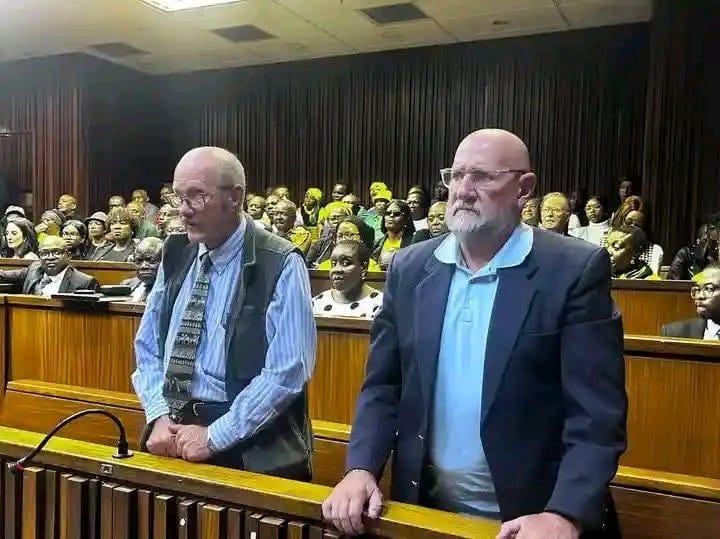
The extended quest for justice in the case of Caiphus Nyoka, a murdered student activist, has encountered delays. This comes after two former police officers from the apartheid era, who were convicted of his homicide, returned to the Pretoria High Court in Benoni, where their sentencing process was postponed due to the health issues of one of the defendants.
On 2 December 2025, Abraham Hercules Engelbrecht, 61, and Pieter Stander, 60, were found guilty of Nyoka’s premeditated murder. Nyoka was a member of the Congress of South African Students (COSAS) and a key figure in the student activism movement during apartheid.
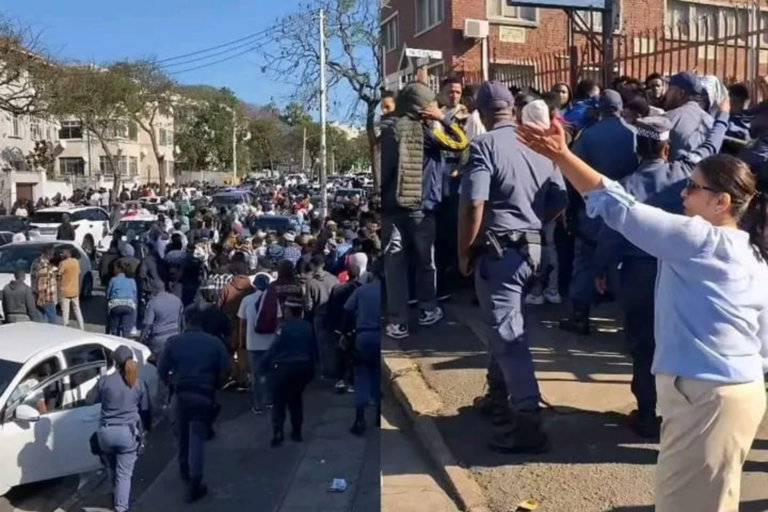
The two men appeared in court expecting the sentencing to begin, but proceedings were delayed after Engelbrecht’s legal representatives requested a postponement, citing his health concerns.
As reported by Tshegofatso Makhudu, a spokesperson for the National Prosecuting Authority (NPA), Engelbrecht needs additional medical evaluations before the sentencing can proceed.
“Engelbrecht needs to consult with a specialist before sentencing proceedings could commence, as well as obtaining a pre-sentence report from Correctional Services,” Makhudu stated.
The court approved the request for a delay, and sentencing is now set for 9 to 13 November 2026.
In the meantime, the state has initiated a legal challenge regarding the acquittal of another former police official linked to the case.
The NPA has submitted an application seeking permission to appeal the acquittal of Major Leon Louis Van Den Berg, 75, a former commanding officer.
Although Van Den Berg was cleared of any involvement in Nyoka’s murder, the state contends that certain elements of the judgment warrant further judicial review.
Makhudu indicated that the judge has reserved judgement on the state’s application, and the outcome will be communicated to both the prosecution and the legal teams representing the convicted police officers.
Nyoka’s assassination remains one of numerous unresolved cases from the apartheid period, continuing to affect the families and communities of victims many years later.
During a time marked by fierce political oppression, Nyoka, an activist with COSAS, was killed as security forces actively targeted those opposing apartheid, including student organizers and community leaders.
The convictions of Engelbrecht and Stander represented a pivotal moment in the long-standing fight for accountability concerning apartheid-era atrocities. However, with the postponement of sentencing and ongoing legal disputes, the case has not yet reached its conclusion.
For Nyoka’s relatives and advocates of justice, the court proceedings signify more than just a singular case; they are part of a broader effort to confront the historical trauma of apartheid violence and seek accountability for those responsible for significant crimes.