Visitors arriving at Cape Town International Airport are falling prey to scams orchestrated by individuals posing as Uber drivers, with some tourists coerced into paying between R10,000 and R25,000 for a ride.
A contractor affiliated with Airports Company South Africa (ACSA) reported to MyBroadband that many international visitors have indicated they may never return to South Africa due to their negative experiences with these fraudulent activities.
This contractor, who splits his time between working at the airport and driving for a licensed e-hailing service, frequently hears about the scams from passengers he transports.
According to him, the fraudulent operations appear to be run by a group of former and current meter taxi operators, who have been affected by the entrance of Uber into the South African market.
To compensate for their losses, these individuals reportedly target weary and disoriented travelers arriving at the bustling airport.
Scammers often wear reflective vests and produce counterfeit identification claiming to be official Uber drivers. They are seen at the airport exits, soliciting rides from incoming passengers.
“Any tourist coming out, they see someone wearing a reflector, and with that badge they then say, ‘oh, okay, it’s an Uber driver, but they are just standing at the exit’,” the contractor explained.
“When you see anyone wearing a reflector vest at the airport, you will think they seem official.”
To further their deceptive practices, the impostors act in ways that draw the attention of travelers and actively attempt to mislead them.
This includes providing false information about the locations of legitimate e-hailing pickup points, urging travelers to cancel their official app-booked rides, and misrepresenting themselves as Uber drivers.
“Some tourists, they will go and ask like, ‘Hey, where’s the parking for Uber pickup?’ The scammers will say, ‘No, he’s very far. But I can take you, just cancel the trip,’” the contractor recounted.
While these fake drivers do transport passengers to their destinations, they often manipulate the payment amounts significantly.
“The trick is when you are not careful, instead of typing R250 in the card machine, they will put R25,000,” the contractor mentioned.
In one reported case, a 70-year-old woman from the United Kingdom expressed that she was charged £800 (R17,690) for a fraudulent ride from the airport.
Tourists charged R25,000 for a R250 trip

Upon noticing the exorbitant charge, the elderly passenger confronted the fraudulent driver, who claimed he accidentally charged her the wrong amount and promised to call his manager for a refund.
Scammers also take advantage of the short stays many travelers have in South Africa to avoid repercussions. Although the tourist filed a report with SAPS before departing, she did not receive reimbursement.
The contractor doubts the traveler’s bank would refund the payment since she willingly tapped her card on the device.
“The passengers are coming from a long flight and are very tired. They are just going to tap. They don’t even see the trick,” he explained.
In another instance, a traveler recounted how their fake driver became aggressive after being questioned for charging R10,000 for a ride that should have cost R200.
“But he’s a tourist. Having a local who is angry and starts getting a bit aggressive. What are you going to do? You end up paying them money,” he said.
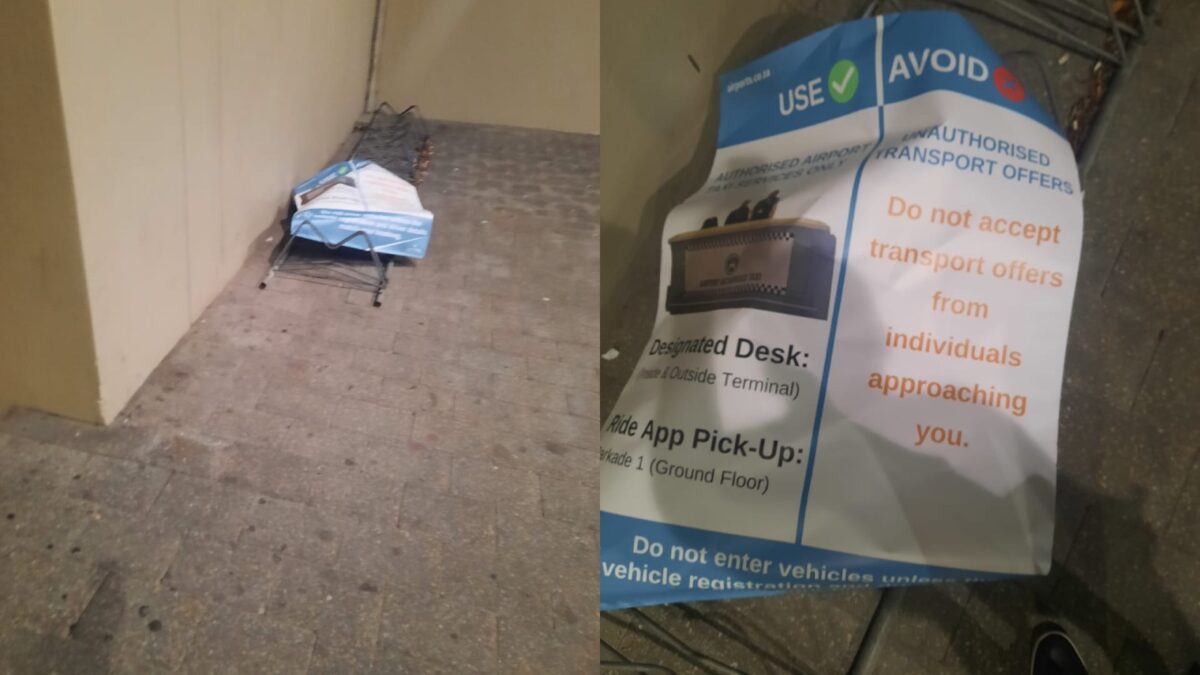
In response to the rise in these incidents, ACSA has attempted to place signs alerting travelers to the presence of counterfeit e-hailing drivers at entrances. Unfortunately, many of these warning signs have been removed or destroyed by the scammers.
The signs advise passengers not to accept transport offers from individuals who approach them directly and to instead utilize designated pickup areas and e-hailing apps for rides.
The initiative to install warnings followed a TikTok video earlier this year that exposed fake Uber scams at the airport.


Don’t miss the latest news